 Competitions
 Deals & Bargains
 Personal Finance
 Thrifty Baby
 Thrifty Beauty
 Thrifty Christmas
 Thrifty Fashion
 Thrifty Food
 Thrifty Holidays
 Thrifty Home
 Thrifty Homebody
 Thrifty Outings
 Thrifty Planet
 Thrifty Wedding
Miss Thrifty10 January 31, 2013
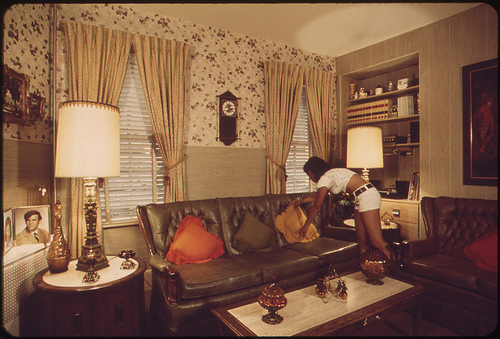
Homemade leather food was one of the first posts I ever published on Miss Thrifty, nearly five years ago (yikes) when readers were still in single digits. Homemade leather food takes seconds to make, saves lots of pounds and I mixed up my latest batch today, so thought it was worth a repost.
The leather sofa and armchair in our front room are hand-me-downs from a kind relative, and are more than 20 years old. Of course the thing with leather is, you have to feed it. If you don’t – and this applies to furniture in particular – it dries out and cracks.
This is where leather food comes in, and it is great stuff: a mixture of oils and waxes, you rub it in with a cloth and it keeps leather clean, soft and sleek. The only downside is that it doesn’t come cheap, costing up to £8 a pot. You can buy leather wipes from the supermarket and these do the same job, but at £2.80 for a pack of 24, they don’t work out particularly economical either.
So here is how to make your own leather food, for pennies.
You will need:
Linseed oil.
White vinegar.
Two soft, clean cloths.
Add two parts oil to one part vinegar. Make up the quantity you need, but note that a little goes a long way. I find that two capfuls of oil and one of vinegar are sufficient for a three-seater sofa.
I buy white vinegar in bulk from Summer Naturals, because I have so many different uses for it around the house. If you don’t have linseed oil in the house, you can pick up a bottle from Amazon or your local DIY store for as little as £2. Raw linseed oil will do just fine, but boiled linseed oil is ok too, if that is what you have lying around: the only difference is that the boiled stuff is thicker, and dries more quickly.
You can make this up in a cup or a small mixing bowl from the kitchen: it’s only oil and vinegar, so it washes up easily.
To use, rub the mixture into the leather with the first soft, clean cloth. Leave it for a few minutes, then buff with the second cloth.
And that’s it! You’ll notice the difference immediately: even aged leather comes up soft and shiny.
Image credit: The U.S. National Archives.
10 Responses to “Make Your Own Leather Food”
Esther says:
Just discovered your wonderful site! Would that work for a vintage designer bag?
January 31, 2013 at 9:47 am
Miss Thrifty says:
Yes, absolutely! If it’s a patent leather bag, you can just use olive oil instead. 🙂
January 31, 2013 at 10:02 am
Esther says:
Thanks!
February 1, 2013 at 3:34 pm
Jorge Goias says:
Would this Wonderful Recipe work For a pair of Football Boots? I assume it would, but i would rather be safe, than sorry.
June 8, 2013 at 2:43 am
Miss Thrifty says:
Oh, I shouldn’t see why not! It’s very gentle, so little chance of ruining anything even if it doesn’t work as intended.
June 10, 2013 at 10:12 pm
[email protected] says:
What sort of white vinegar do you use. Does it matter Apple, Wine .? Can not get malt vinegar in Slovenia.
May 30, 2016 at 12:04 pm
Miss Thrifty says:
I use white vinegar in big 5-litre bottles from http://www.summernaturals.co.uk. It isn’t food grade vinegar. However if you aren’t a vinegar nut like me, any type of white (clear) vinegar would do – I’d go for white wine vinegar.
June 5, 2016 at 12:30 am
Nathan says:
Just so you know boiled linseed oil and raw linseed oil are not the same, boiled linseed oil has a hand full of nasty chemicals added to it to make it dry faster. Raw linseed oil is just the oil pressed from flax seeds.
October 16, 2016 at 8:04 am
Miss Thrifty says:
Oh, that’s good to know – thanks Nathan.
November 2, 2016 at 1:59 pm