 Competitions
 Deals & Bargains
 Personal Finance
 Thrifty Baby
 Thrifty Beauty
 Thrifty Christmas
 Thrifty Fashion
 Thrifty Food
 Thrifty Holidays
 Thrifty Home
 Thrifty Homebody
 Thrifty Outings
 Thrifty Planet
 Thrifty Wedding
Miss Thrifty22 November 4, 2009
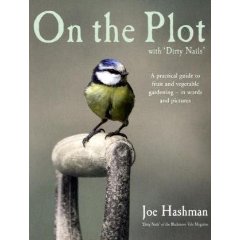 If, like me, you like growing your own vegetables but you are no Bunny Guinness, this little book is something of a godsend.
Why? Well, it is jam-packed with handy hints, which is good. But what makes this book great is that it spells out all the bits and bobs that you should be doing in the garden, on a week-by-week basis. It’s a bossy book!
For this reason I am grateful to the publisher who sent it to me, and hopeful that On The Plot With ‘Dirty Nails’ could be the missing link between my vegetable garden that exists in my head, and my vegetable garden that exists in real life. In my head: I stoop over a raised bed of lush vegetation, deciding which scrumptious fruits and vegetables will be going into my salad. THERE ARE NO SLUGS. My vegetable garden in reality, right now: a post-apocalyptic scenario featuring bare earth, howling wind and a few dead tomato and sweetcorn plants that I haven’t yet gotten round to composting. Help, please!
Would you like to win a copy? See below…
In the meantime, here are a couple of extracts from Dirty Nails’ advice and instructions for November Week 1:
The First Frost
As if prompted by the change in month, November dawned with the first frost of the winter. This pleases winter veg growers because it heralds the opening of parsnip season. With a 10-metre row of handsome nails in the ground, Mrs Nails and I have much to look forward to. It is by no means essential to wait for freezing temperatures before tucking into ‘snips. However, because starches in this crop are turned into sugars as a result of the low temperatures, they are all the sweeter for it.
Jobs To Do This Week
In the greenhouse:
- Continue sorting and cleaning bit by bit if a whole weekend session is impossible.
On the plot:
- Swaddle wormeries with bubble wrap if the forecast is for freezing weather. (Note: the wormery is for the hygienic disposal of cooked food waste, and it looks like the non-squeamish amongst us get to make it in May Week 2.)
- Turn over the earth on open areas on heavy soils, or apply a mulch of bulky organic matter to lighter ground.
- Cut down and clear rank vegetation amongst the fruit trees. Keep the bases immediately around the trunks weed free.
- Sow green manures on open plots. Crimson clover is good; it will bind the soil and fix atmospheric nitrogen in the roots.
- Cut down nettles from around the compost heaps.
- Transplant biennial wild flowers that have sprouted in the veg patch, such as foxgloves and great mullien. They will flower next year and be an asset to pollinating insects so make room for them where they won’t interfere with edible crops.
This book is available from Amazon ; at the time of writing, prices begin at £6.65.
BOOK GIVEAWAY: Would you like to win a brand new copy? I have one to give away. I will post to anywhere in the world – but I’d bear in mind that if you live in, say, the Sonoran Desert, the seasonal instructions may be a little out of whack for you.
The competition ends at 8 pm (GMT) on Sunday 8 November, when I’ll pick the winner out of an online hat.
To enter: simply leave a a comment below. If you have a thrifty gardening tip, I’d love to hear it; if you don’t, just leave a short message…
22 Responses to “BOOK GIVEAWAY: On The Plot With ‘Dirty Nails’”
Kelly says:
Oh my husband would love this book. His thrifty tip would be to cut the bottom off a 2 litre pop bottle and use them as mini cloche’s. It works very well for him.
November 4, 2009 at 9:48 am
Claire says:
A thrifty gardening tip: save your old, laddered tights, cut them into strips and use them to tie up tomatoes, beans etc onto poles. They stretch so are much better than string (they don’t cut into the stems as they grow).
November 4, 2009 at 10:03 am
apieceofwood says:
Would love to be in with a chance of winning the book!
November 4, 2009 at 11:13 am
Sheila says:
Have just moved house and am overwhelmed by very steep, overgrown garden and pond. Frogs rule. If this book is half as good as its title, I’ll unpack the wellies and try to wrestle back control…
November 4, 2009 at 11:23 am
Sarah says:
My top thrifty tip is get a gardener @ £25 ph and go out and work for A LOT more than that 🙂
Oh – and basil in the kitchen brightens up LOADS of meals 🙂
Hope I win, because as you can see – I NEED ALL THE HELP I CAN GET lol
xxx
November 4, 2009 at 12:46 pm
Lottie says:
I would dearly love to own this book and thank you for the chance of entering your draw.
I use the middle cardboard of loo rolls to sow sweet pea, runner beans, climbing beans in. Pack them into a recycled mushroom box, fill with compost – and any roots that grow through the tube grown safely in the surrounding compost, makes them so easy to transplant.
November 4, 2009 at 1:59 pm
Jack says:
Hello! I have a garden for the very first time and have no idea where to start with it so I’d love to win a copy of this book.
I don’t have a gardening tip as such, but do read ‘The thrifty Gardener’ by Alys Fowler – it’s packed full of brilliantly thrifty advice.
November 4, 2009 at 3:55 pm
Christin says:
This book sounds awesome! We are moving into our first house in Dec and I can’t wait to plant our garden…this would be so helpful:) Thanks!
November 4, 2009 at 4:44 pm
Voucher Mum says:
I’d love to win! I’m trying to get more into growing veg and have been writing a bit about it on the blog: http://www.vouchermum.com/2009/10/20/kitchen-gardens-101-basil/ Next attempt will be chilis!
November 4, 2009 at 6:56 pm
Andy Sowden says:
The book looks great – we are not having a holiday in 2010 and hope to concentrate more fully on our veg garden, so a weekly planner would be of great benefit.
My tips would be to buy organic seeds – you can then save the seeds to plant out the next year. Try to swap seeds and growing tips with friends and neighbours – it is worth knowing which varieties perform well in your local soil and growing conditions. In addition to the other comment about loo rolls, the middle of kitchen rolls or Pringle containers are great to grow leeks in.
November 4, 2009 at 8:17 pm
Deborah May says:
Use crushed-up egg shells to keep slugs off. But not if you have hens, as they will eat the eggshells themselves and scratch up your plants in the process!
November 4, 2009 at 8:59 pm
Alexandrea M says:
Great book! I admit after my plants stopped producing veggies I kinda just…started ignoring it. I KNOW there is all sorts of maintenance and things I should be doing, I mean I should still be harvesting winter crops right? Sigh, thank you for the giveaway, I’d love to win! I need a strict gardening parent!
November 5, 2009 at 2:29 am
Claire T says:
Nettle and comfrey leaves left in a bucket with water makes great fertiliser; collect fallen tree leaves and store wet in bin bags for seed compost for next year; and the thing that saves me the most money is giving saved seeds and cuttings away, then being cheeky and asking fellow gardeners for theirs – they are usually more than willing to swap, and you end up with loads of different plants.
November 5, 2009 at 9:56 am
Maxine says:
this book looks lovely and i hope it would inspire me to be a little more adventurous next year in the garden – thanks for the giveaway!
November 5, 2009 at 1:05 pm
Theresa N says:
I need lots of help with my garden, my tomatoes were so sad this year. Please sign me up.
Theresa N
weceno(at)yahoo(dot)com
November 5, 2009 at 2:57 pm
Mia J. says:
I would like to win this for my friend who just started her own vegetable garden. I think she would really like this. Thanks for the chance.
November 6, 2009 at 1:03 am
Pam says:
Not exactly a top tip, but I just wanted to say that I quite enjoy weeding!!!! The book might inspire me to go one step further…..
November 6, 2009 at 9:16 am
Rachel says:
Oh, I too dream of vegetable uptopia! Lets hope the book comes my way! Love the blog x
November 6, 2009 at 11:38 am
Isabel R says:
Never overlook the cut-price plants or seeds at a nursery or garden centre… most plants will perk up with a good feed and some TLC; with seeds, if you soak them the night before you sow them you’d be surprised how many germinate even if they are past their so-called best before date!
November 6, 2009 at 4:56 pm
Tim Griffiths says:
I am going to buy this book for myself but would like to win a free copy to give to my son-in-law! He needs some instruction!!
(P.S. good job by nephew)
November 7, 2009 at 10:27 pm